The Last Job
Scraps
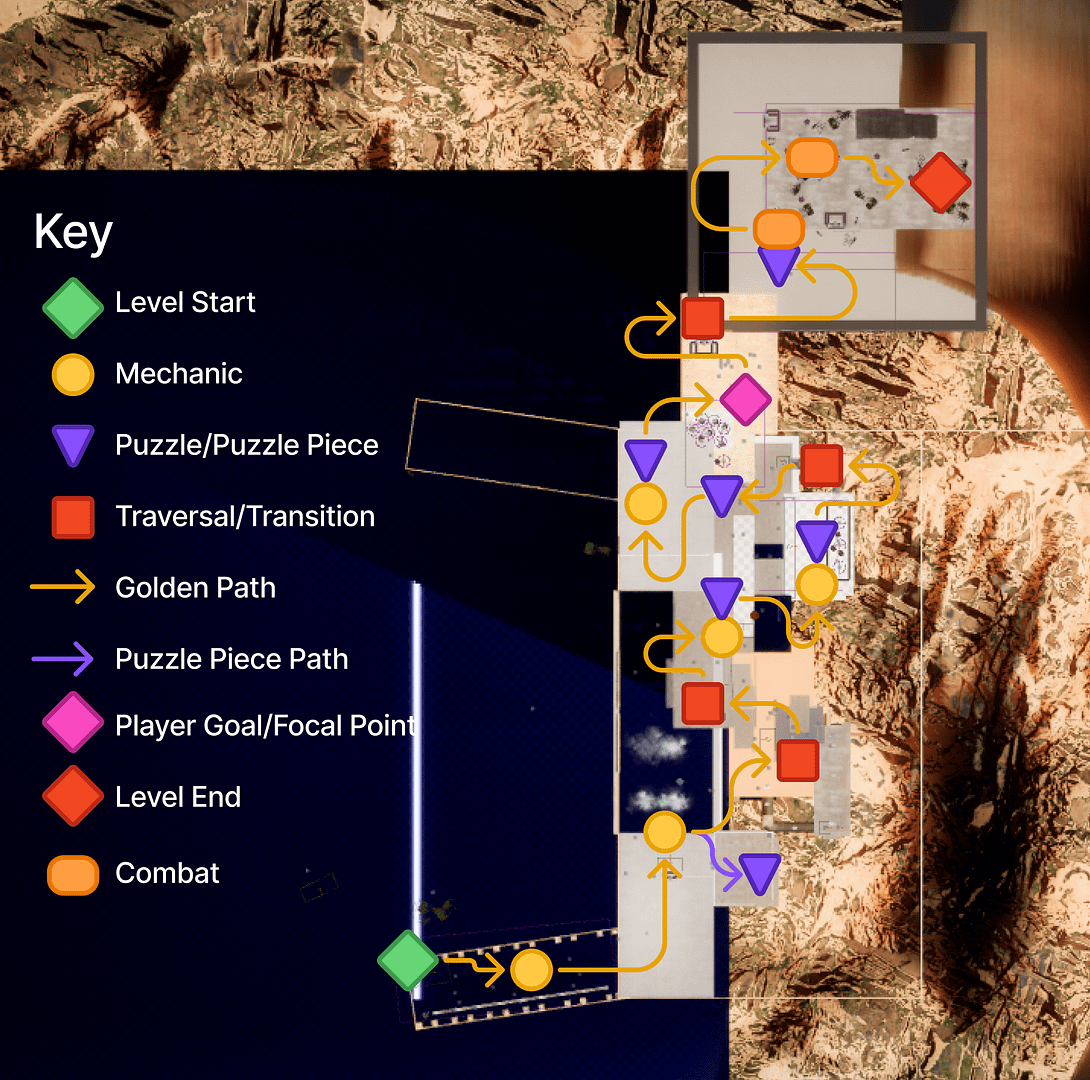
I collaborated with a team to design and develop a level for a post-apocalyptic first-person shooter (FPS) puzzle adventure, called Scraps. With puzzles as the primary pillar, the design emphasized how players engage with and understand the underlying mechanics. Affordance and environmental guidance were central to this approach, using spatial cues and leading lines to direct players without explicit instruction. The project spanned three weeks, with one week for preparation and two weeks for development. Throughout the process, we balanced constraints in both gameplay and art direction, adhering to an aesthetic of 85% realism with only light sci-fi and minimal fantasy elements.
The overworld map I created served as a visual guide to align the level layout with the overall design vision. It established the level’s base pacing and flow, enabling team members to effectively block out their areas. This supported cohesive transitions between areas and made it easier to pivot when content needed to be cut due to time constraints.
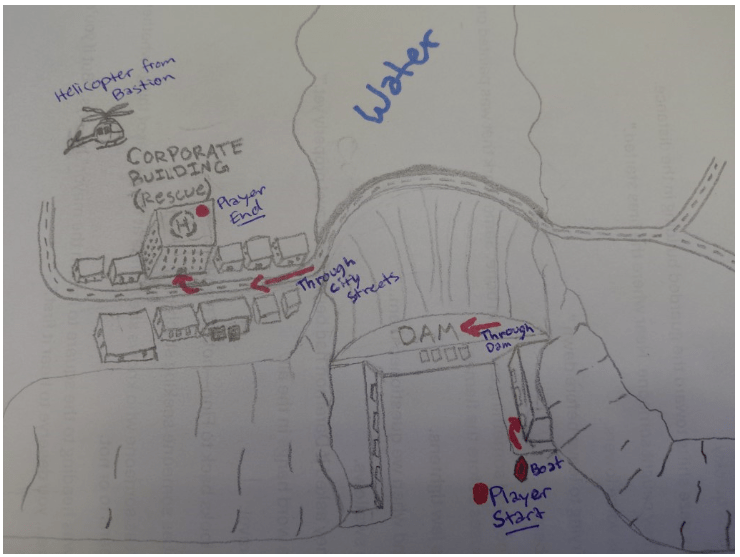


During the block out process in my initial area, I prioritized using environmental guidance and sightlines to lead the player along the intended path. This provided a strong early foundation, streamlining the implementation of mechanics, puzzles, and assets along the critical path. As a result, I was able to focus more on polishing areas and conducting additional playtesting to identify bugs early.


As we entered the beta phase, we shifted responsibilities. I took ownership of running through the level from start to finish to integrate and refine the mechanics. This helped establish a balanced progression of introduction, practice, and mastery across the entire level, which in turn improved player readability, level pacing, and flow.
A key part of integrating and refining the mechanics involved scripting two interactive objects: a wire and a battery. The wire was used twice in the level, while the battery was used once. If the items were not correctly placed, the stabilization button and exit door would remain locked. Players were required to place the objects throughout the level to progress toward their goal, reinforcing the narrative of repairing parts of the dam before stabilizing it.

Throughout this project, I learned several key lessons.
First, team communication and planning are essential at every stage of development, including daily stand-ups and consistent updates on individual progress. Second, I gained experience working with Perforce and Unreal Engine’s World Partition system in a team environment. World Partition provided insight into how effectively teams can collaborate across remote set-ups or various locations. During this project, I also took time to script an interactive object as an Easter egg. This small addition helped further immerse players in the world and was enjoyable to implement. It served as a subtle way to add depth to the level and encourage player curiosity during playtesting. Overall, the project successfully met its design goals and delivered an engaging and enjoyable player experience.